
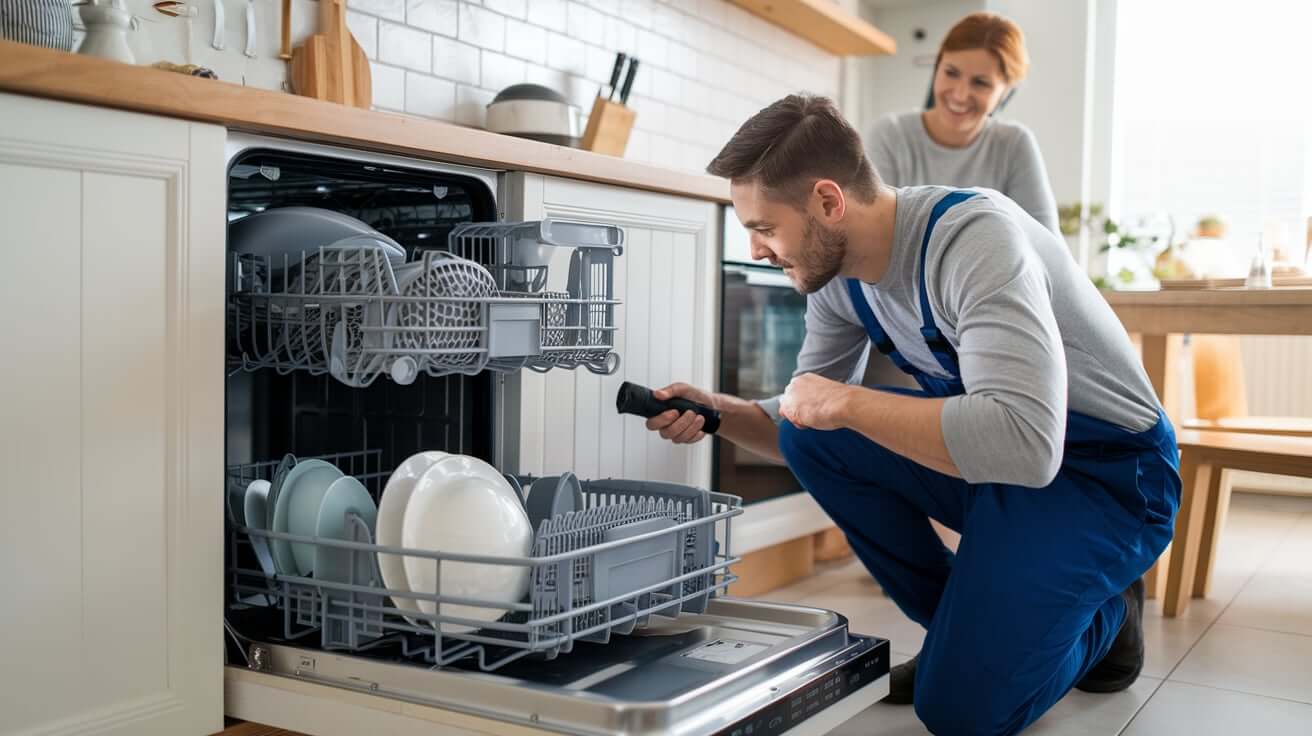
White film on glasses, chalky spots on dark plates and a gritty feel on the inside of the dishwasher door are some of the most common complaints we hear from Rochester homeowners. In most cases the dishwasher is not broken. The water is hard. Rochester and most of southeast Minnesota draw water from limestone aquifers, so it carries a lot of dissolved calcium and magnesium. When that water dries on dishes, the minerals stay behind.
The fix depends on whether you are looking at mineral scale, which comes off, or etching, which is permanent damage to the glass. This guide shows how to tell the difference, the cleaning routine that removes scale, the settings that prevent it and the signs that scale has started to damage parts inside the dishwasher.
Quick answer: why are my glasses cloudy?
Cloudy glasses in Rochester are usually hard water scale. Use rinse aid, run the kitchen tap hot before starting the dishwasher, clean the filter and spray arms, and run a monthly descaling cycle. If the cloudiness does not wipe off with vinegar, it is etching from soft water or too much detergent, and it cannot be reversed.
Scale or etching? The 5 minute vinegar test
- 1
Pick a cloudy glass
Choose one that looks typical of the problem.
- 2
Soak it in white vinegar
Fill a bowl with plain white vinegar and soak the glass for five minutes.
- 3
Wipe and rinse
Wipe with a soft cloth and rinse with clean water.
- 4
Read the result
If the glass is clear, the film was mineral scale and can be prevented. If it is still cloudy or has rainbow streaks, the glass is etched.
| Hard water scale | Etching | |
|---|---|---|
| What it looks like | White, chalky film or spots | Milky haze, sometimes rainbow tint or fine lines |
| Vinegar test | Wipes off | Stays |
| Main cause | Hard water drying on dishes | Soft water plus too much detergent, very hot water |
| Reversible? | Yes | No |
| Prevention | Rinse aid, descaling, softener | Less detergent, gentler cycle |
Why Rochester water causes it
Hard water is measured in grains per gallon. Water above about 7 grains is considered hard, and much of southeast Minnesota tests well above that, whether it comes from city wells or private wells in Byron, Oronoco or Eyota. Every cycle leaves a thin mineral layer on dishes, inside the tub, in the spray arm holes and on the heating element. Over months that layer builds up, the spray arms push less water and dishes come out dirtier, which many people then try to fix with more detergent. Extra detergent does not dissolve scale and can etch glasses if you also have a softener.
How to remove white film and scale
- 1
Clean the filter
Twist out the cylindrical filter under the lower spray arm, rinse it under hot water and scrub it with a soft brush. A clogged filter recirculates dirty, mineral heavy water.
- 2
Clear the spray arms
Pop off the lower and upper spray arms and use a toothpick to clear every hole. Rinse them under the tap until water flows evenly from each hole.
- 3
Run a descaling cycle
With the dishwasher empty, place a dishwasher cleaner or a cup of white vinegar upright on the top rack and run the hottest cycle.
- 4
Fill the rinse aid
Rinse aid helps water sheet off dishes so minerals do not dry in spots. In hard water, set the dispenser to a higher setting.
- 5
Run the tap hot first
Dishwashers clean best with 120°F incoming water. Run the kitchen tap until it is hot before starting a cycle.
- 6
Use the right amount of detergent
Follow the dose for hard water on the package. Pods and tablets with built in rinse agents work well in Rochester water.
Dishwasher settings that help
Many dishwashers, including Bosch, Miele and some Whirlpool and KitchenAid models, have a water hardness setting. It tells the dishwasher how much rinse aid to use or, on models with a built in softener, how often to regenerate. Set it to match your water. Using heated dry or a sanitize option also helps water evaporate before minerals settle. If your dishwasher has a built in salt reservoir, keep it filled with dishwasher salt.
Should you get a water softener?
A whole house softener prevents scale in the dishwasher, water heater, washing machine and ice maker, so it often pays off across all your appliances. If you install one, cut detergent back, because soft water plus a full dose of detergent is the classic recipe for etching.
When hard water becomes a repair
Years of scale can start to damage parts. These signs suggest more than a cleaning problem:
- Dishes come out wet and the tub is cool at the end of the cycle: the heating element may be coated or failed
- The dishwasher fills slowly or not at all: the water inlet valve screen may be clogged
- A loud hum and little spray: the circulation pump may be struggling
- Standing water after the cycle: the drain pump or filter area may be blocked
- A Bosch E15 code: water has reached the base pan, often from a leak at a scaled seal
Bosch owners can read our E15 error guide. Scale affects other appliances too; see water heater warning signs.
Loading tips that reduce spots
How you load the racks changes how much water reaches each dish, and dishes that are rinsed poorly hold more mineral residue. A few habits make a visible difference in hard water homes.
- Angle glasses and cups down between the tines so water drains off instead of pooling on top
- Keep tall items away from the center of the lower rack so the upper spray arm can turn freely
- Scrape food but do not pre rinse heavily; modern detergents need some soil to work against
- Do not nest bowls or spoons together, which blocks spray and traps water
- Unload the bottom rack first so drips from the top rack do not land on dry dishes
If you have just installed a water softener, give it a few weeks to clear existing scale from your plumbing, then run two descaling cycles in the dishwasher. Many Rochester homeowners notice clearer glasses within a month.
If film keeps coming back or dishes come out wet and dirty, book dishwasher repair in Rochester. We check the heater, inlet valve and pumps and descale the machine on the same visit.
Common questions
Does a water softener help my dishwasher?
Yes. Softened water prevents scale in the dishwasher and on dishes. Use less detergent with softened water to avoid etching.
Why are my dishes still wet after the cycle?
A failed or scaled heating element, heated dry turned off, or no rinse aid can all leave dishes wet.
Is vinegar safe for my dishwasher?
An occasional vinegar cycle is safe for most dishwashers. Do not use it every cycle, and never mix it with bleach.
Can etched glasses be fixed?
No. Etching is permanent damage to the glass surface. Prevent more by using less detergent and a gentler cycle.
How long does it take a new softener to fix white film?
Usually a few weeks. Run two descaling cycles after installing it to remove the scale already inside the dishwasher.