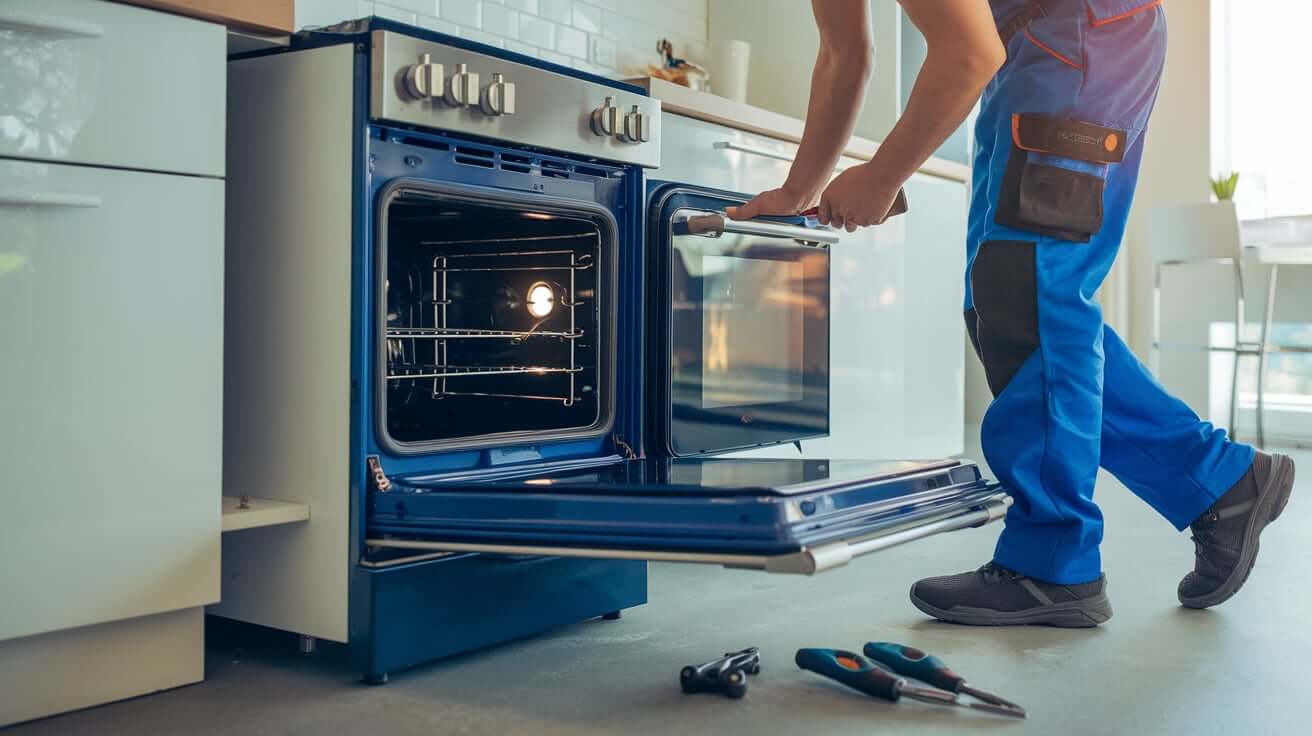
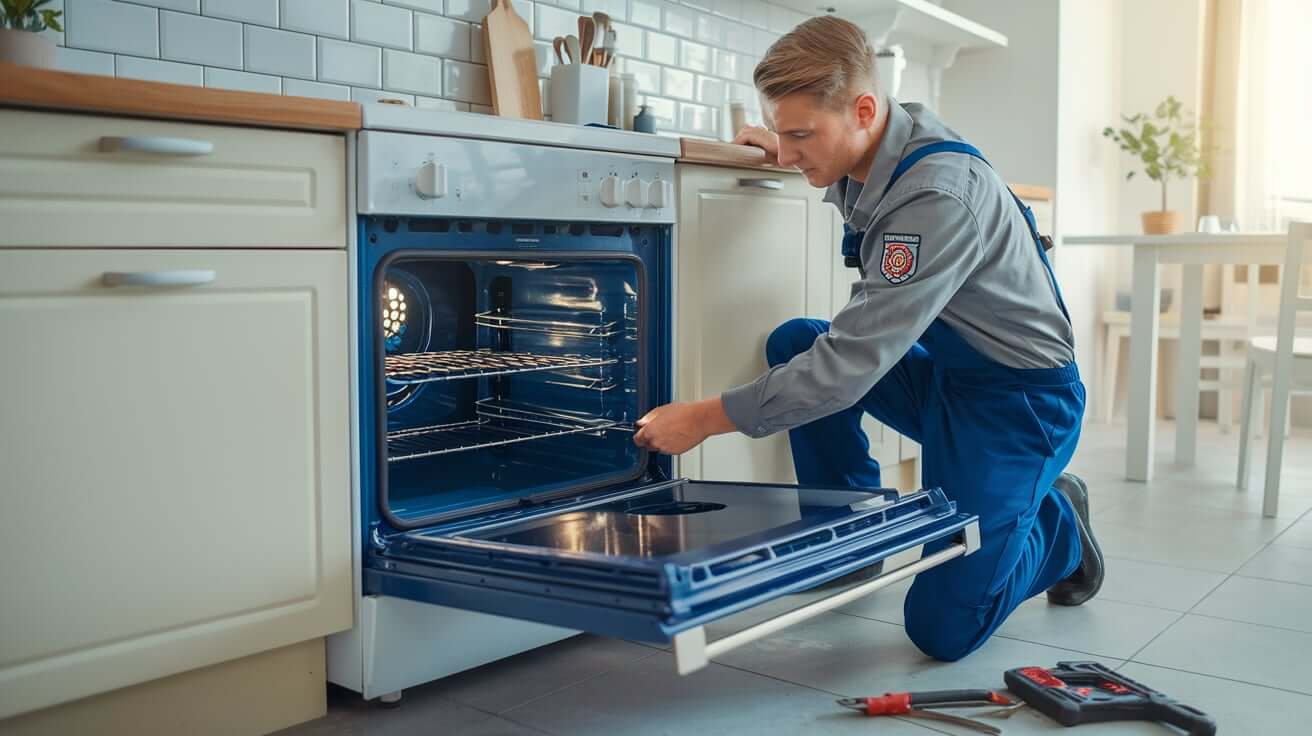
On January 15 a homeowner in Kutzky Park, just northwest of downtown Rochester, called about a GE Spectra range, model JGBP35, that was about 24 and a half years old. The oven had stopped heating with no warning. The cooktop still worked.
Quick answer: why did this GE Spectra oven stop heating?
The oven temperature sensor had drifted far outside its normal resistance, so the control could not read the oven temperature and would not run bake properly. The elements and control board were fine. Replacing the sensor restored normal heating on a range almost 25 years old.
Step by step diagnosis
| What we tested | Result |
|---|---|
| Breaker and power at the control | Power present, control responding |
| Bake and broil elements | Continuity good, no blistering |
| Oven temperature sensor resistance | Reading far outside the room temperature spec |
| Control board | No visible damage or loose connectors |
An oven temperature sensor on most GE ranges reads roughly 1,100 ohms at room temperature. This one was well outside that range, so the control could not read the oven temperature and would not run the bake cycle properly.
The repair
We replaced the sensor with a compatible GE part, then ran a bake test to 350°F and checked the temperature with a separate oven thermometer. The oven heated normally and held temperature. The control board did not need replacing, which saved the owner from a far bigger repair on an older range.
Tools we used
- Digital multimeter
- Circuit tester
- Screwdriver and nut driver set
- Flashlight
- Oven thermometer for the final check
How an oven temperature sensor works
Most modern ovens use a resistance temperature detector, a thin probe usually mounted at the upper back of the oven cavity. Its resistance rises as the oven heats. The control reads that resistance many times a minute and switches the bake or broil element, or the gas valve, on and off to hold the set temperature. On many GE ranges the sensor reads roughly 1,100 ohms at room temperature. If the sensor fails open, shorts or drifts, the control may stop heating altogether, display an error code or heat to the wrong temperature.
Oven heating symptoms and what they point to
| Symptom | Electric oven likely cause | Gas oven likely cause |
|---|---|---|
| No heat at all | Bake element, sensor, control relay | Igniter, safety valve, sensor |
| Heats but wrong temperature | Sensor or calibration | Sensor or weak igniter |
| Burns food on the bottom | Sensor or broil element firing during bake | Sensor |
| Error code on display | Sensor or control | Sensor or control |
| Broil works, bake does not | Bake element | Bake igniter |
Repairing older ranges
This range was close to 25 years old, and it was still worth repairing because the sensor is an inexpensive, common part and everything else was sound. Older GE, Whirlpool and Frigidaire ranges often use simple, long lasting components. Before replacing an older range, have a technician test the sensor, element or igniter; a single part repair can give years of service. Gas range owners should also read why gas ovens stop heating.
How to check your oven temperature at home
- 1
Use an oven thermometer
Place it in the center of the middle rack.
- 2
Preheat to 350°F
Wait 20 minutes after the preheat signal so the temperature settles.
- 3
Read three times
Check every 10 minutes and average the readings, since ovens cycle above and below the set point.
- 4
Compare
More than 25°F off on average suggests a sensor problem or a need for calibration.
Many GE ovens allow a small temperature offset adjustment in the settings menu, which can correct a minor difference without parts. A large difference, or no heat at all, needs a sensor test.
Older homes in Kutzky Park
Kutzky Park has many well kept older homes where owners prefer to repair rather than replace appliances that fit their kitchens. We see a lot of long lived ranges there, and sensors, igniters and elements are the usual repairs. Read more on our Kutzky Park appliance repair page.
The tools we used and what each one tells us
| Tool | What it checks |
|---|---|
| Circuit tester | That the range is receiving power at the outlet or terminal block |
| Multimeter | Continuity of the bake and broil elements and resistance of the temperature sensor |
| Screwdrivers | Access to the sensor mounting screws and rear panel |
| Flashlight | Inspection of wiring, terminals and the element surface |
| Oven thermometer | That the oven reaches and holds the set temperature after the repair |
The order matters. Confirming power first prevents wasted time on parts when the real issue is a tripped breaker or a loose cord. Testing the elements next rules out the most common electric oven failure. Only then does the sensor test mean something, and only after both pass does the control board come under suspicion. On this oven the sensor reading was the one result far out of range.
Checking bake and broil elements
A healthy element shows continuity on a multimeter and often reads somewhere in the range of 15 to 40 ohms, depending on the model. Look for blisters, cracks or a spot where the coil has burned through. A failed element usually stops glowing in one area or does not glow at all. If the elements test good and the oven still does not heat, the sensor and control are next.
What we check after replacing a sensor
Once the new sensor was installed, we ran the oven through a bake cycle and confirmed temperature with a separate oven thermometer. We also listened for the element cycling on and off as it held temperature, which shows the control is now reading the sensor correctly. A properly working oven will rise past the set point, then drop slightly below it, then cycle within a narrow band.
Oven problems of your own? Read our oven, stove and range repair guide or our guide to a gas oven that will not heat.
Common questions
Why did my oven suddenly stop heating?
On electric ovens the bake element or temperature sensor is the usual cause. On gas ovens a weak igniter is most common. A multimeter test tells which part failed.
Is it worth repairing a 20 year old oven?
Often yes. Sensors, elements and igniters are inexpensive and widely available, so a single part repair can keep an older range working for years.
Can a bad oven sensor stop the oven from heating?
Yes. If the control cannot read the temperature, many ovens will not heat or will show an error code.
Where is the oven temperature sensor?
Usually a thin metal probe at the upper back of the oven cavity, held by two screws.
How long does an oven temperature sensor last?
Many last the life of the oven, but heat and self clean cycles can make them drift after years of use.
Is a 25 year old oven worth repairing?
Often yes, if the cabinet and controls are sound and the failure is a common part like a sensor, element or igniter.