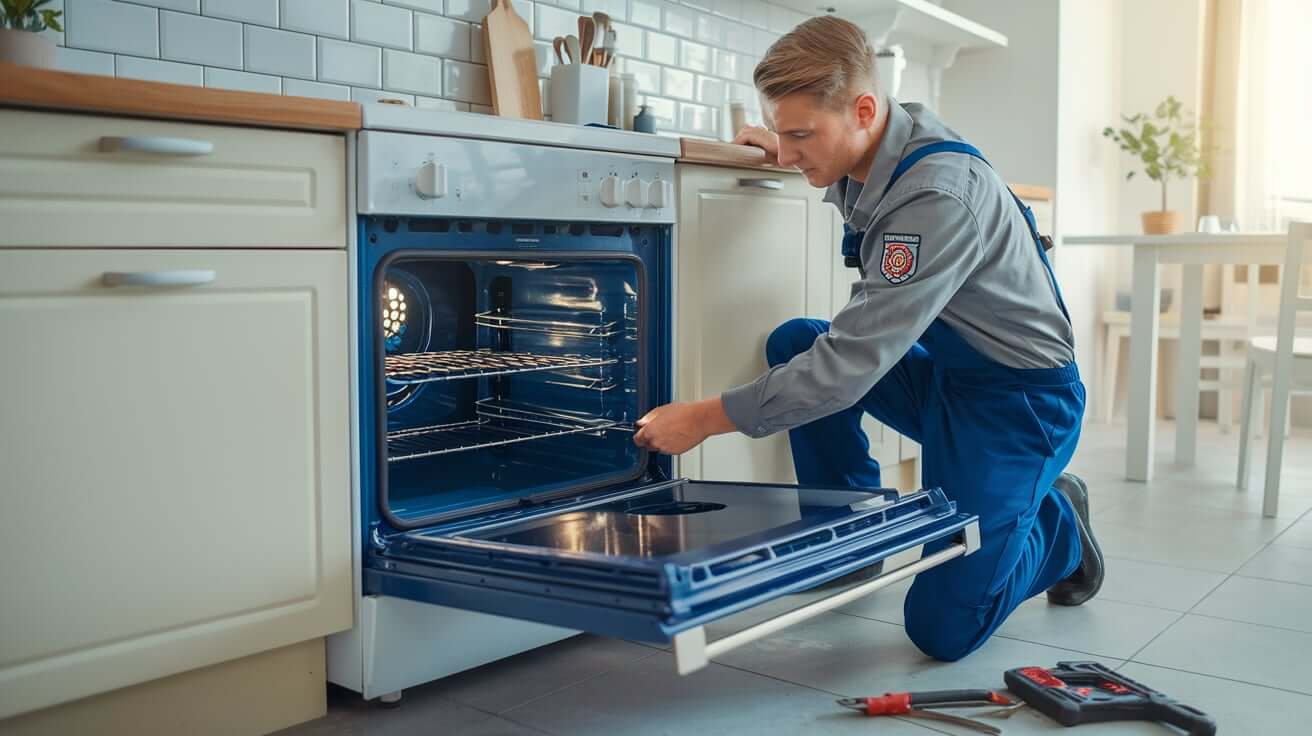
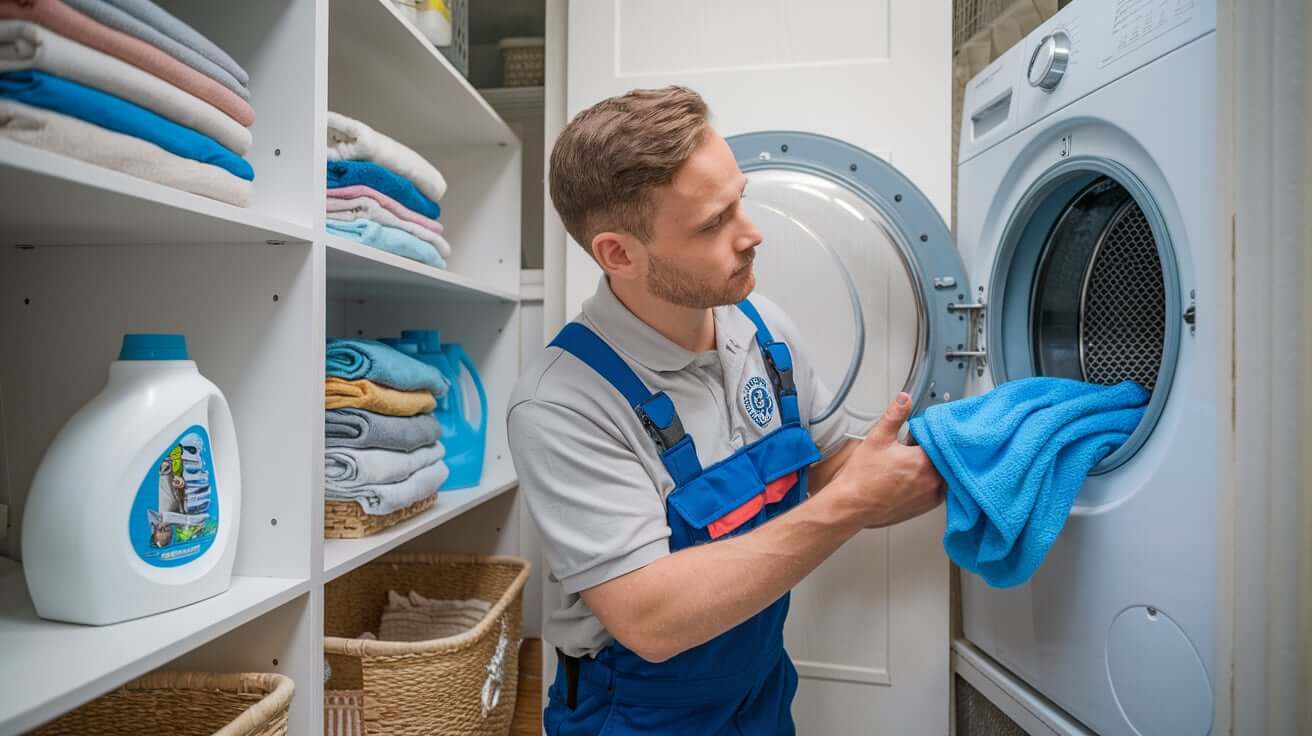
On February 1 we visited a home in Plainview, MN with a Whirlpool WFW6620HC front load washer leaving puddles along the bottom front edge. Most front load leaks come from the door boot seal, so that is where we started.
Quick answer: why was this Whirlpool washer leaking?
Detergent and softener residue had narrowed the channels in the dispenser drawer and the siphon baffle was clogged and out of place, so water backed up and spilled during the fill, running down inside the front panel to the floor. Cleaning the tray and reseating the baffle stopped the leak without new parts.
Tracing the leak to the soap tray
The door gasket was dry and undamaged, with no water between the door and the base. So we followed the water path from the top instead. During the fill, water was overflowing the detergent dispenser and running down inside the front panel.
- 1
Removed and inspected the soap tray
Thick detergent and softener residue had narrowed the channels so water backed up and spilled over.
- 2
Removed the siphon baffle
The baffle in the main compartment was clogged and slightly out of place, which slowed drainage into the tub.
- 3
Checked the inlet area
Unlike some LG models with inlet screens, this Whirlpool lets debris reach the dispenser more easily. We cleared buildup at the inlet.
After cleaning the tray, reseating the baffle and running two full test cycles, the floor stayed dry.
Why is my Whirlpool washer leaking?
| Cause | Where you see water | Fix |
|---|---|---|
| Clogged or cracked soap dispenser | Front bottom edge during fill | Clean or replace the tray and housing |
| Torn door boot seal | Under the door | Replace the boot seal |
| Loose inlet hose or failing inlet valve | Behind the washer | Tighten or replace hoses, replace valve |
| Drain pump or internal hose leak | Under the machine during drain | Replace pump or reattach hose |
| Too much detergent | Suds leaking from the door or dispenser | Use 1 to 2 tablespoons of HE detergent |
How a front load detergent dispenser works
When a front load washer fills, water from the inlet valve is routed into the dispenser drawer and flushes detergent, bleach or softener down a channel into the tub. Softener compartments use a siphon cap or baffle that holds liquid until the rinse fill, then siphons it out. If residue builds up, or the siphon parts are missing or misaligned, water cannot flow away as fast as it comes in, and the overflow escapes the drawer housing. Because it runs down inside the cabinet, the water often appears at the bottom front edge, which looks exactly like a door seal leak.
Use timing to find any washer leak
| When the leak happens | Most likely source |
|---|---|
| During fill | Dispenser drawer, inlet valve, fill hoses |
| During wash and tumble | Door boot seal, tub seal, suds escaping |
| During drain | Drain pump, pump filter, drain hose, standpipe |
| When the washer is off | Inlet valve leaking or a supply hose |
Run a short cycle while watching with the toe kick panel removed or with a flashlight under the front. Knowing the cycle stage cuts diagnosis time in half.
How to prevent dispenser leaks
- Pull the drawer out monthly and soak it in warm water with a little white vinegar
- Clean the drawer cavity with a small brush, especially the top where mold and residue collect
- Make sure every siphon cap and baffle is seated fully before closing the drawer
- Use only HE detergent and stay below the max line
- Do not pour powder into the liquid compartment or liquid into the powder compartment
Notes from Plainview homes
Homes around Plainview often use well water, and minerals add to the residue in dispensers and inlet screens. A softener or a sediment filter on the supply line helps keep dispensers, valves and screens clear. If your washer fills slowly as well as leaking, see our guide to a front load washer not draining, which covers filter and pump problems.
When to call a technician
Call if water appears even when the washer is off, if the door boot seal is torn, if there is water under the machine after the drain stage, or if the dispenser is cracked. Those point to an inlet valve, seal, pump or hose that needs to be replaced. We also check that the washer is level, because a washer that rocks can loosen hose clamps over time.
Why we also cleaned the inlet screens
Behind each fill hose connection on the back of the washer sits a small mesh screen that catches sand, rust flakes and mineral grit before they reach the water inlet valve. On this Whirlpool the screens had collected debris. A partly blocked screen does not cause a leak on its own, but it changes how water enters the dispenser: flow can spurt unevenly and splash past the drawer channels. Cleaning the screens restored a steady fill and protected the inlet valve from wear. To clean them, shut off both faucets, disconnect the hoses into a bucket, pull the screens out gently with needle nose pliers, rinse them under a tap and reinstall them before reconnecting the hoses hand tight plus a quarter turn.
Other Whirlpool front load leak sources
Door boot seal
The rubber boot between the door and the tub can tear or collect debris in its folds. A leak here shows up during the wash and tumble stages, usually at the bottom of the door. Wipe the folds after each week of laundry and check for cuts from zippers or coins.
Drain pump and filter cap
A loose pump filter cap or a cracked pump housing leaks during the drain and spin stages. If the floor is wet only after the washer finishes, check that the filter cap is fully tightened.
Fill and drain hoses
Rubber fill hoses harden and crack with age. Braided stainless hoses are a durable upgrade and are worth replacing every five years. A drain hose that slips out of the standpipe can also flood the floor during drain.
Tub seal and bearings
A grinding or roaring sound during spin together with a leak at the back of the washer points to a failed tub seal and bearings. That repair is larger, and on an older washer it is worth weighing against replacement.
What is safe to do yourself
Cleaning the dispenser drawer, the drawer cavity, the inlet screens and the pump filter are all owner maintenance tasks that need no special tools. Unplug the washer before removing any panel, keep towels ready for trapped water and never run the washer with the drawer or a siphon cap missing. Replacing valves, pumps, seals and bearings is better left to a technician who can test the parts first.
Laundry trouble of your own? Read our washer and dryer repair guide or see how to clear a front load washer that will not drain.
Common questions
Why is my front load washer leaking from the bottom?
Check the detergent dispenser first, then the door boot seal, the drain pump and the inlet hoses. Watching when the leak happens (fill, wash or drain) narrows it down quickly.
Can too much detergent make a washer leak?
Yes. Excess suds, especially from non HE detergent, can push water out of the dispenser and door seal. Use 1 to 2 tablespoons of HE detergent per load.
Can a front load washer leak from the dispenser?
Yes. A clogged or cracked dispenser drawer or a misplaced siphon cap can overflow during fill and leak out the front of the washer.
Why does my washer only leak sometimes?
Leaks that depend on load size or detergent amount often come from suds or the dispenser. Leaks every cycle point to a hose, seal or pump.
How often should I replace washer fill hoses?
Every five years for rubber hoses, or sooner if they bulge or crack. Braided stainless hoses last longer.